- Getting around
- Hallstatt has no airport of its own; most visitors fly into Salzburg (about 75 minutes away) or Vienna, then come by car or train. By rail, take a service to Hallstatt station on the eastern shore and cross on the little ferry Stefanie, which is timed to the trains and costs a few euros - a magical arrival. Driving is easy but the village core is car-free, so park in the numbered P1 and P2 lots on the Lahn edge and walk in; day parking runs around 10 to 12 euros and fills fast by late morning. Within the region, Postbus 542 and lake steamers link Bad Ischl, Obertraun, Gosau and St Wolfgang, and a Salzkammergut regional card can save on fares. The village itself is entirely walkable in fifteen minutes end to end.
- Money
- Austria uses the euro. Cards and contactless are widely accepted in hotels, restaurants and shops, but carry some cash for the ferry, small cafes, market stalls and parking machines. Tipping is modest and expected for good service: round up or add roughly five to ten percent by telling the server the total you want to pay rather than leaving coins on the table. A coffee runs around 3 to 4 euros and a main course of lake fish or schnitzel typically 15 to 25 euros. Salt souvenirs from the mine shop make a cheap, characterful gift.
- Safety
- Hallstatt is extremely safe, with almost no street crime; the real hazards are crowds and terrain. The narrow lakeside lanes get densely packed midday, so mind your footing and watch children near the unfenced water and jetties. Mountain weather on the Dachstein changes fast, so check forecasts and carry a warm layer for the cable cars, caves and salt mine, all of which stay cold year-round. Trails to the waterfall and viewpoints can be slick after rain. Drones are restricted around the village. Otherwise relax - this is one of Europe's gentlest destinations.
- Best season
- Late spring (May to June) and early autumn (September to October) are ideal: mild, green and far less crowded than the July and August peak, when coach tourism and cruise-style day-trips swell the lanes. Winter is quiet, atmospheric and often dusted with snow, though some mountain lifts and boat services run reduced hours and a few restaurants close. Whenever you come, the golden rule is to arrive early or stay overnight, as the village transforms once the last afternoon coaches leave. Pre-book the salt mine and Dachstein cable cars in high season.
- Where to stay
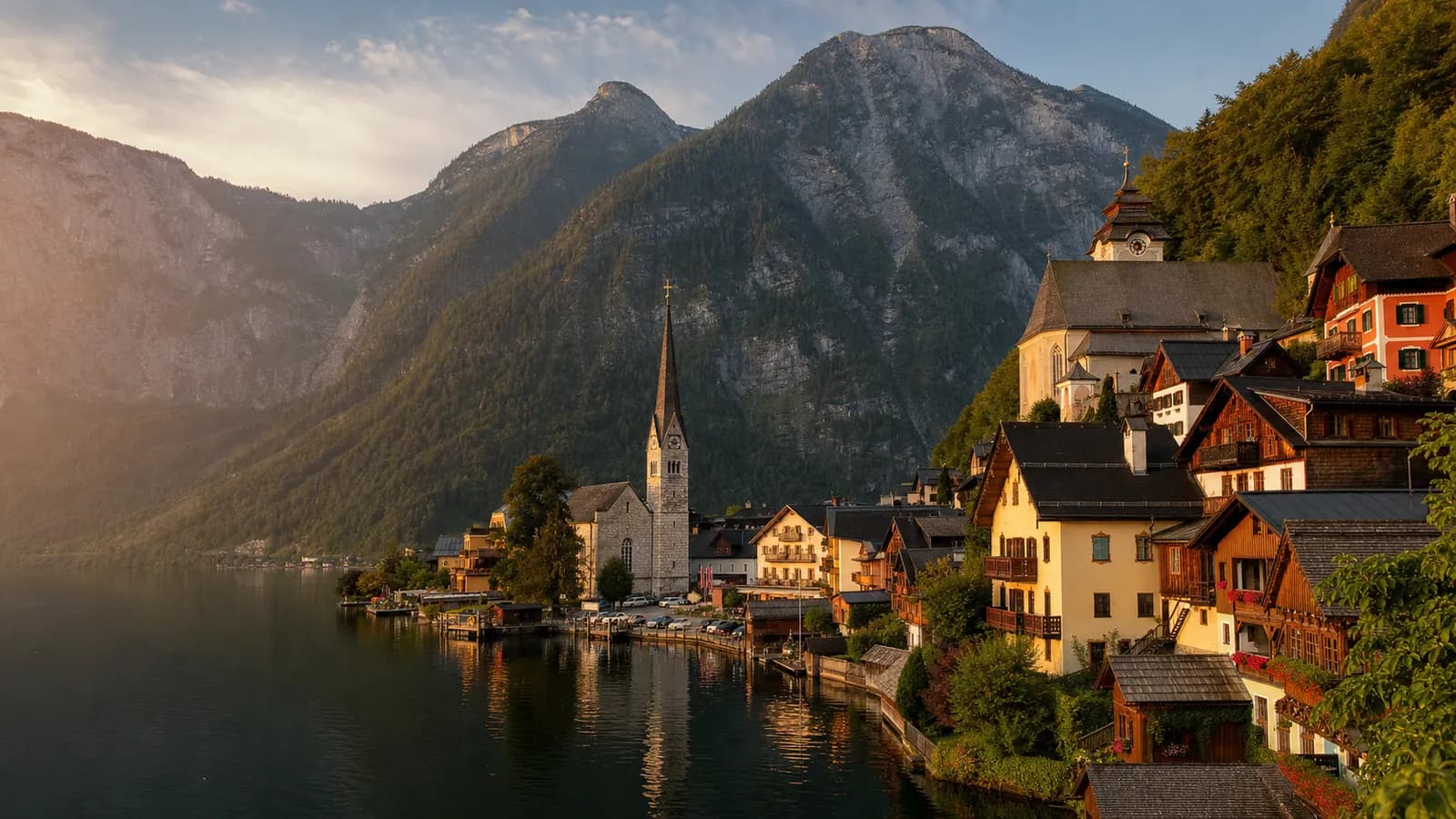
- Staying in the village itself, around the Marktplatz, is the dream: you get the empty, magical mornings and evenings after the crowds go, though rooms are limited and pricey, so book far ahead. The Lahn, at the southern end near the boat rentals and bus stops, is a slightly quieter and more practical base still within an easy walk. For lower prices and more choice, nearby Obertraun across the lake and Bad Goisern to the north put you minutes away by car, bus or boat while keeping the Dachstein and the wider Salzkammergut on your doorstep.
 Austria