- Getting around
- Munich's MVV network of U-Bahn, S-Bahn, trams and buses is excellent and the compact centre is very walkable. Buy a single ticket or, better, a day pass (Tageskarte) or the multi-person Gruppenkarte from machines or the MVV app; for inner-city sightseeing the white 'M' zone covers nearly everything. Validate paper tickets before boarding and keep them, as controllers are frequent and fines steep. From the airport (MUC), the S1 and S8 trains run into the centre in about 40 minutes. For day trips, the Bayern-Ticket gives unlimited regional-train travel across Bavaria and is a bargain for two or more people.
- Money
- Germany uses the euro, but Bavaria is stubbornly cash-friendly - many beer gardens, market stalls, bakeries and older Wirtshäuser are cash-only or card-shy, so always carry notes and coins. Cards and increasingly contactless work in supermarkets, larger restaurants and hotels, but never assume. Tipping is modest and done verbally: round up or add roughly 5-10 percent by telling the server the total as you pay, rather than leaving coins on the table. Beer gardens often charge a refundable Pfand deposit on the glass Mass - keep the token and return the mug to get it back.
- Safety
- Munich is one of Europe's safest big cities and the centre feels relaxed day and night. The usual precautions apply: watch your belongings around the Hauptbahnhof, on crowded trams, and at packed beer halls and during Oktoberfest, when pickpocketing and over-drinking incidents rise. Tap water is excellent and safe to drink. The biggest real hazard is the Eisbach surf wave, which is for experienced surfers only with a strong current and shallow rocks, so admire it but don't be tempted in.
- Best season
- Late spring to early autumn (May to September) is the sweet spot, when beer gardens are in full swing and the Englischer Garten is glorious. Oktoberfest runs roughly mid-September to the first weekend of October, exhilarating but mobbed, with hotel prices doubling, so book months ahead or deliberately avoid it. December brings atmospheric Christmas markets on Marienplatz and the gateway to Alpine skiing. Winter is cold and grey but cheap and uncrowded; whenever you visit, remember almost everything except restaurants and museums closes on Sundays.
- Where to stay
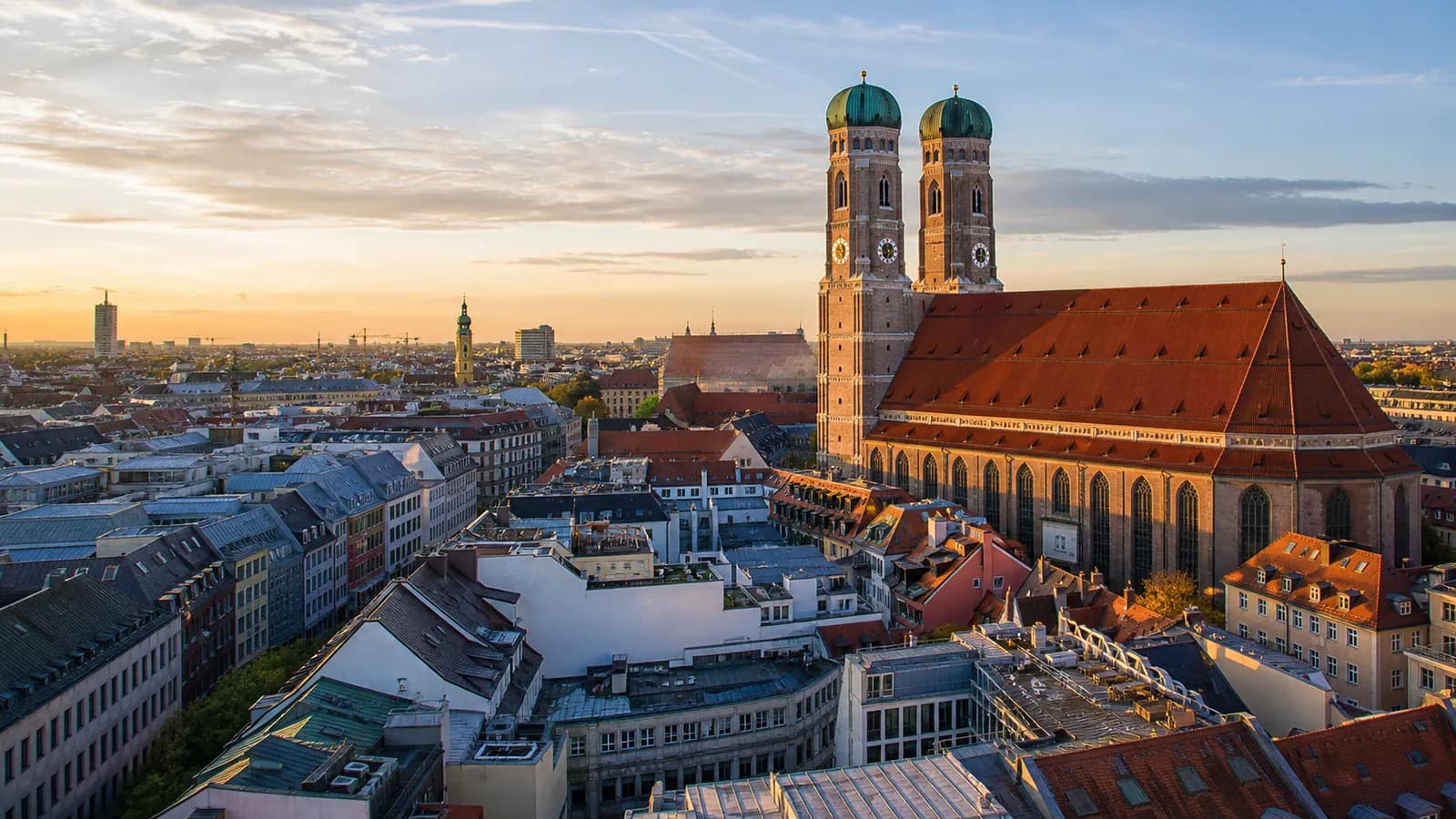
- For first-timers the Altstadt around Marienplatz puts every sight on your doorstep but costs the most and can be noisy. The area around the Hauptbahnhof is cheapest and best-connected for day trips, though scruffier. Schwabing and Maxvorstadt are leafy, stylish and full of cafés and museums, ideal for a calmer base near the Englischer Garten and the Pinakotheken. Au-Haidhausen, across the Isar, is residential, atmospheric and good value with easy tram access. Avoid booking during Oktoberfest without reserving far in advance, as the whole city sells out.
 Germany