- Getting around
- You will really want a car on the Dingle Peninsula, as the best of it, Slea Head, Conor Pass and the ancient sites, lies well beyond town and public transport is thin. Local Link buses run from Tralee to Dingle a few times a day, and the train reaches only as far as Tralee, so most visitors drive in from Kerry Airport (about an hour) or Cork (over two hours). The Slea Head Drive is narrow and single-track in places, so keep left, use passing bays and mind tour coaches, which travel clockwise. In town everything is walkable in ten minutes and parking is easiest along the harbour or the pay-and-display lots. In summer, guided minibus tours of the peninsula are a good carless option, and taxis are limited, so book ahead.
- Money
- Ireland uses the euro. Cards and contactless are accepted almost everywhere, including most pubs and restaurants, but carry some cash for the small family-run ancient sites, honesty boxes and the odd chipper queue. Tipping is relaxed: around ten percent in a sit-down restaurant if service was good, and no need to tip at the bar for pints. Dingle is a tourist town, so summer prices for dinner and accommodation run higher than inland Kerry. A pint of stout is a few euro, and the small heritage sites charge only a couple of euro each, usually in coins.
- Safety
- Dingle is very safe, with little crime beyond the occasional summer opportunist, so normal care with valuables is enough. The real hazards are the weather and the terrain. Atlantic squalls arrive fast, so carry a waterproof and check the forecast before driving the Conor Pass, which can be fog-bound and treacherous. Coastal currents are strong: swim only at supervised or well-known beaches like Inch, and never turn your back on the sea at exposed coves like Coumeenoole. Cliff paths at Dunbeg and Dunquin are slippery and unfenced, so wear proper footwear and keep well back from crumbling edges.
- Best season
- Late spring and early autumn, May, June and September, are the sweet spot: long days, the best odds of dry weather and lively but not overwhelming crowds. July and August are warmest and busiest, when Slea Head coaches are frequent and you must book restaurants and rooms ahead, especially around the Dingle Regatta and races. Winter is quiet, atmospheric and cheap, but many tourist spots, boat trips and some restaurants shut down, and daylight is short. Whenever you come, pack for rain, as the peninsula can serve four seasons in a single afternoon.
- Where to stay
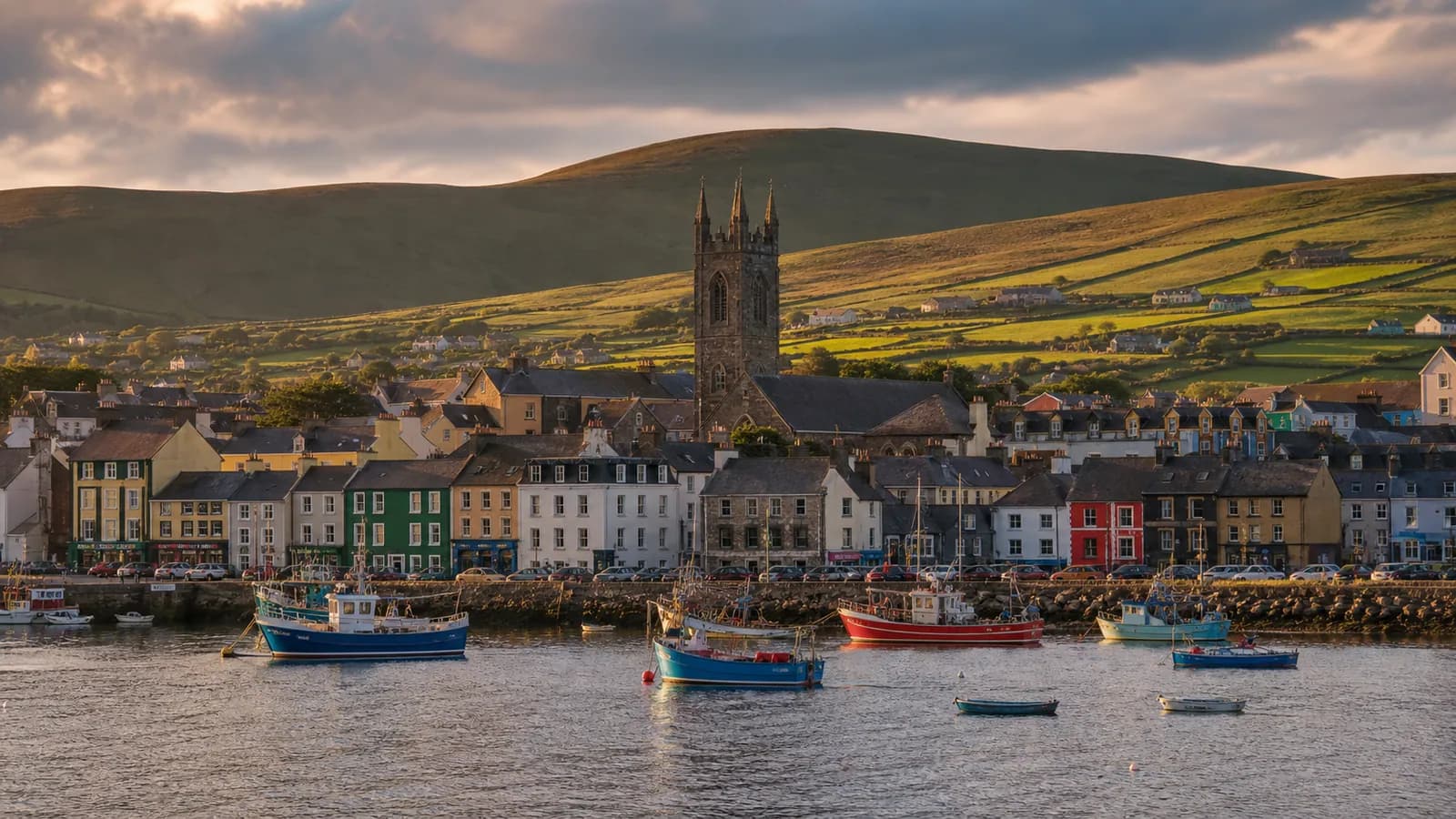
- Staying in Dingle town puts you within walking distance of the pubs, restaurants and harbour, which is ideal for first-timers who want music sessions on their doorstep; the streets around Main Street and Green Street are the liveliest. The Wood, along the harbour toward the marina, is quieter and handy for the pier and the aquarium while still being a short stroll in. For a rural base with sea views and dark skies, look to Ventry or Ballymore just west of town on the Slea Head road, which suit drivers who want space and a fireside guesthouse feel.
 Ireland