- Getting around
- Interlaken has two stations, Ost and West, and both are the hubs for the Bernese Oberland railways, cable cars and lake boats. There is no airport nearby, so most visitors arrive by train from Zurich, Bern or Geneva, changing at Bern or Spiez, in around two to three hours. In town everything is walkable, but the mountains need planning: a regional pass such as the Berner Oberland Pass or the Jungfrau Travel Pass covers most trains, buses, boats and many cable cars, and pays off quickly. The Jungfraujoch, Schilthorn and lake steamers carry premium fares, so check what your pass covers. Trains and connections run precisely to timetable, so pick up a route plan.
- Money
- Switzerland uses the Swiss franc. Cards and contactless work almost everywhere, including on mountain railways, but carry some cash for small kiosks and picnic supplies. Interlaken is a resort town and prices are high, especially the flagship excursions: the Jungfraujoch in particular is a major outlay, so decide which one summit you most want. Save money by self-catering picnics from supermarkets, using a regional travel pass, and drinking the free, clean mountain and fountain water. Tipping is not expected as service is included, though rounding up for good service is normal and appreciated.
- Safety
- The Bernese Oberland is very safe, and crime is minimal. The real risks are mountain-related: fast-changing weather, sudden cold and thin air at altitude, and slippery or exposed trails. Always check the forecast, carry layers, sun protection and water, and stick to marked paths. Adventure sports like paragliding, canyoning and skydiving are popular and generally well run, but choose reputable operators. In winter, watch for ice and avalanche warnings and respect closures. Lake water is cold and deep, so take care swimming. Mobile coverage can drop in remote valleys, so tell someone your plans.
- Best season
- Summer, from June to September, is prime time for hiking, lake boats and clear summit views, with July and August the busiest and priciest. Late spring and early autumn are quieter and lovely, though some high trails and lifts open late or close early. Winter, from December to March, turns the region into a ski and snow-sports base, with the resort villages of Grindelwald, Wengen and Murren buzzing. Some mountain railways run reduced schedules in the shoulder seasons and pause for maintenance in spring and autumn, so check operating dates. Book flagship excursions and hotels well ahead in peak months.
- Where to stay
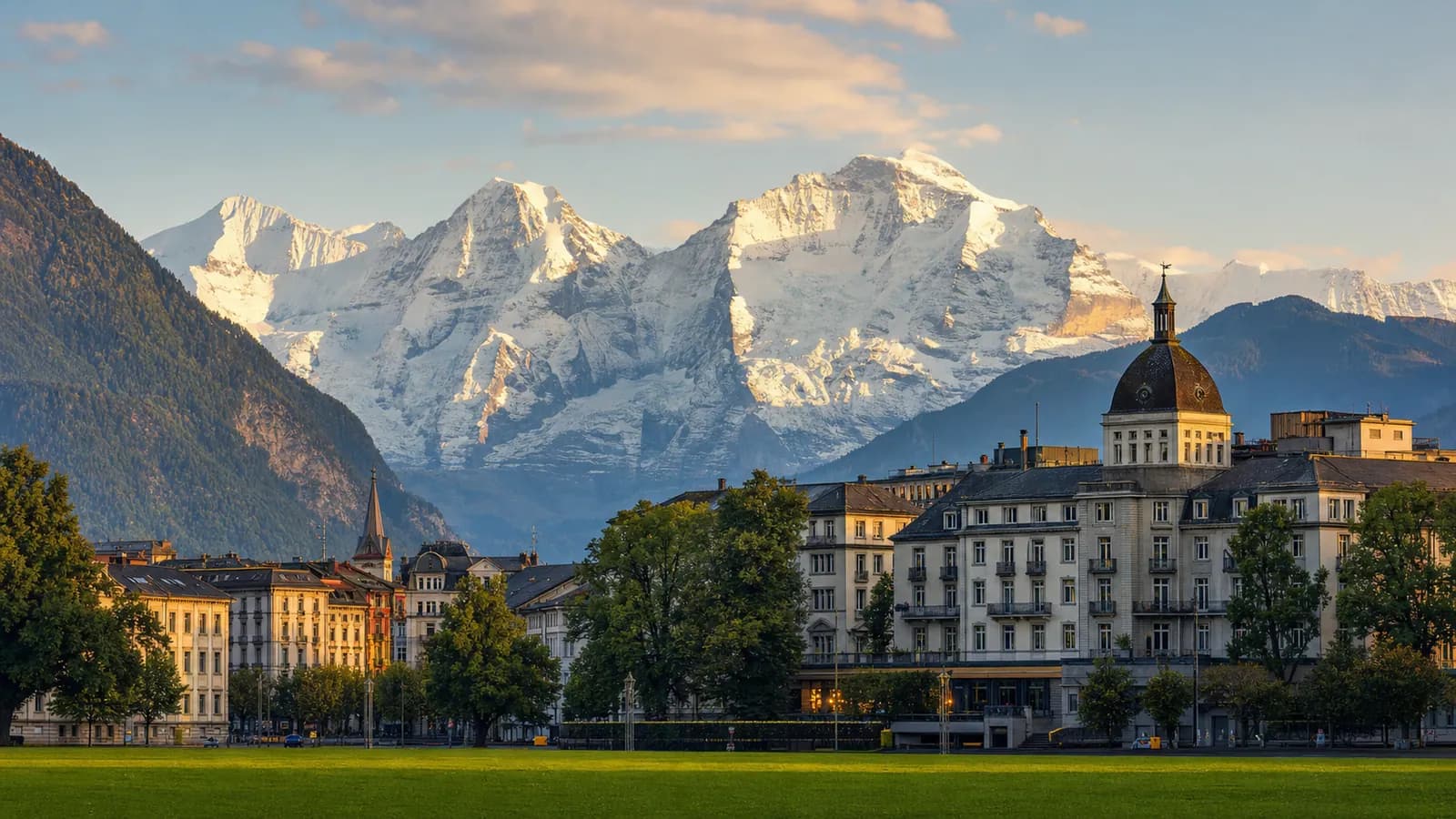
- Central Interlaken along and near the Hoheweg promenade is the most convenient base, close to both stations, shops and restaurants, though busier. Quieter Unterseen, just across the Aare, offers a charming medieval feel within an easy walk of the centre. For mountain immersion, many visitors instead stay up in the valley and hillside villages: car-free Wengen and Murren for high Alpine calm and views, or Grindelwald for a lively resort beneath the Eiger. Choose central Interlaken for lakes and logistics, or a mountain village if hiking and summit scenery are your priority.
 Switzerland