- Getting around
- Zermatt is car-free, so drive only as far as Tasch and leave the car in the multi-storey there, then take the shuttle train the final five minutes into the village (a train runs every 20 minutes). The alternative is to arrive entirely by rail via Visp, where the Matterhorn Gotthard Bahn connects to the main Swiss network. In the village itself you walk or use small electric taxis and hotel e-buses; there is no need for a car. The mountains are reached by three systems: the Gornergrat cog railway, the Sunnegga funicular and Rothorn lifts, and the cable cars to Matterhorn Glacier Paradise. A Peak Pass covers all of them, and the Swiss Travel Pass gives discounts, so price the passes against your planned ascents.
- Money
- Switzerland uses the Swiss franc. Cards and contactless work almost everywhere, but a butcher's grill or a mountain hut may prefer cash, so carry some francs. Zermatt is one of the priciest resorts in the Alps: expect a coffee around 5 francs, a simple mountain lunch 25 to 40 and a fondue dinner comfortably over 40 per head. Mountain-railway tickets are a major cost, so a multi-day pass often pays off. Service is included and tipping is not obligatory; rounding up for good service is the norm. Tap water is excellent and free, so refill bottles rather than buying.
- Safety
- Zermatt is very safe from crime, and the car-free streets remove traffic danger. The real risks are alpine: altitude at the high stations can cause headaches and breathlessness, so ascend gradually and hydrate, and sun at altitude is fierce even in cold air, so use strong sunscreen and sunglasses. Weather changes fast, so check forecasts, carry layers and never leave marked trails without proper preparation. Off the groomed pistes there is genuine avalanche risk in winter, so heed local warnings and hire a guide for anything serious. On hikes, wear sturdy footwear, as scree and snow patches linger into summer.
- Best season
- Zermatt has two peak seasons. For hiking, mid-June to early October offers open trails, running lifts and long days, with July and August warmest and busiest; September brings golden larches and thinner crowds. For skiing and snowboarding, December to April delivers reliable high-altitude snow, and the glacier area even allows summer skiing. Late April to mid-June and late October to November are quieter shoulder periods when many lifts and restaurants close for maintenance, so check what is running. Book marquee mountain restaurants and hotels well ahead in both high seasons, especially over Christmas, New Year and the February holidays.
- Where to stay
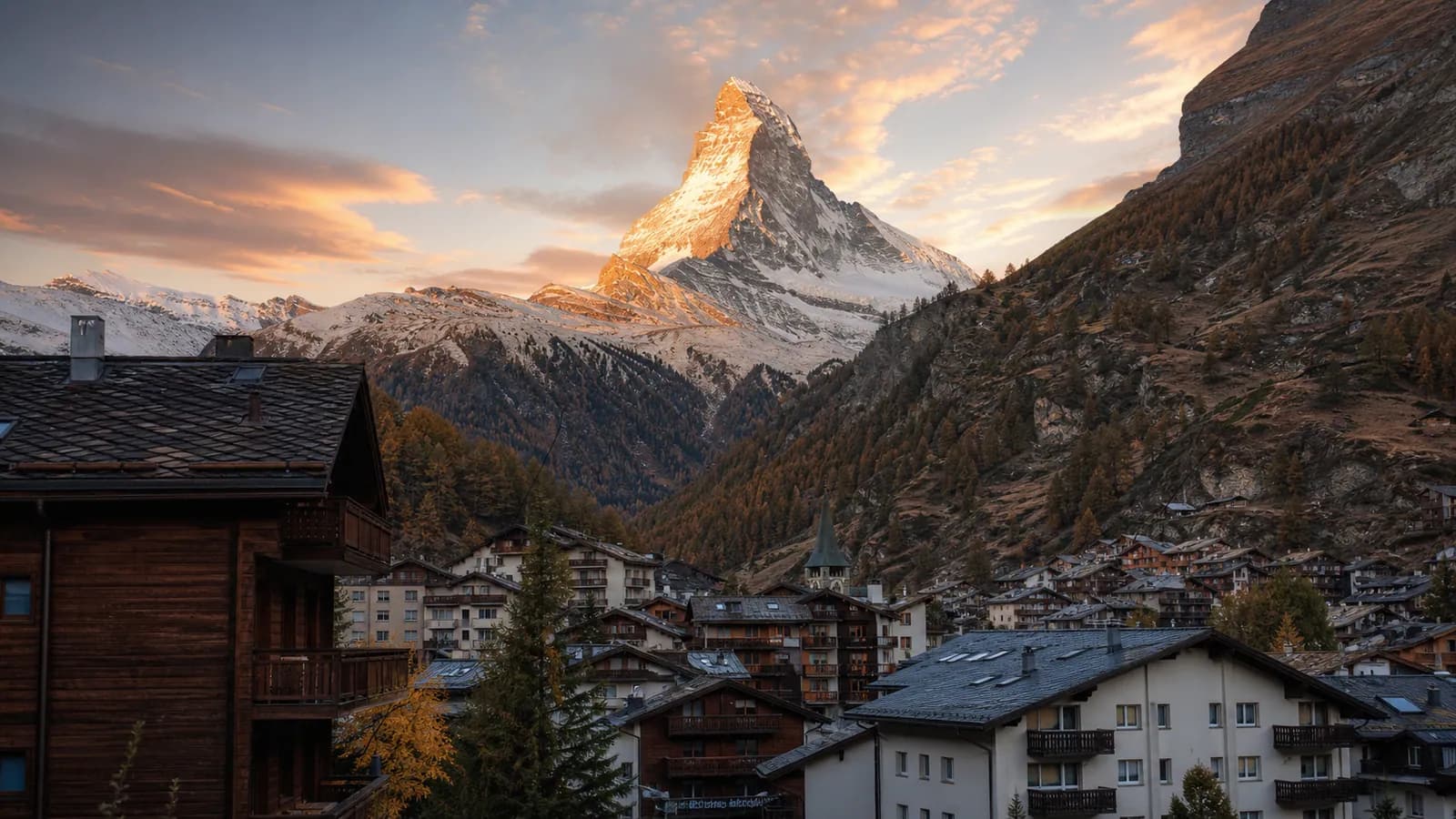
- The area around Bahnhofstrasse and Kirchplatz in the village centre is the liveliest base, steps from the railways, shops, bars and most restaurants, though it is the busiest and priciest. For quiet and a private Matterhorn view, the elevated Winkelmatten and Petit-Village neighbourhoods on the southern slopes suit those who do not mind a short uphill walk or an e-bus. Families and skiers often prefer staying near the Sunnegga or Matterhorn Glacier Paradise lift stations for quick morning access to the slopes, trading a little village buzz for convenience on the mountain.
 Switzerland